
small mirror with lights
Understanding Plug Gauges Essential Tools for Precision Engineering In the realm of precision engineering and manufacturing, ensuring the correct dimensions of machined parts is paramount. One of the critical tools employed in this process is the plug gauge. Designed for checking the internal dimensions of holes and bores, plug gauges are integral to quality control and assurance in various industries, including automotive, aerospace, and electronics. What is a Plug Gauge? A plug gauge is a cylindrical measuring device used to verify the dimensional accuracy of holes. Typically made from high-grade steel, these gauges can be classified into two primary types Go gauges and No-Go gauges. The Go gauge is slightly smaller than the specified hole diameter, ensuring that it can fit into the hole if it is within the acceptable tolerance range. Conversely, the No-Go gauge is slightly larger, designed to ensure that if it does fit, the hole is out of specification. Types of Plug Gauges 1. Plain Plug Gauges These are the simplest form of plug gauges, used for basic inspections of hole diameters. 2. Tapered Plug Gauges These gauges have a tapering design that allows them to check not only the diameter but also the conformance of the shape and size over a distance. 3. Adjustable Plug Gauges These are used when a more precise measurement is required. They can be adjusted to different sizes, offering flexibility for various dimensions. 4. Specialty Plug Gauges Custom-made plug gauges are designed for specific applications, such as checking unique hole shapes or sizes in specialized components . Importance of Plug Gauges plug gauge The accuracy and precision of products depend significantly on the effectiveness of the measurement tools used during the manufacturing process. Plug gauges play a vital role in ensuring that parts fit together as intended, which is especially important in assemblies where multiple components are combined. If parts do not meet specified tolerances, it can lead to assembly issues, increased production costs, and even failures in the final product. Moreover, the use of plug gauges contributes significantly to the efficiency of the manufacturing process. By implementing these gauges, manufacturers can conduct quick inspections of parts, minimizing downtime and streamlining production. This efficiency is crucial in today’s fast-paced manufacturing environment, where speed and accuracy directly impact competitiveness in the market. How to Use Plug Gauges Using a plug gauge effectively requires a clear understanding of tolerances and specifications. Operators must first verify that the gauge is calibrated and in good condition. The process generally includes the following steps 1. Insert the Go Gauge The operator places the Go gauge into the hole. If it fits, it indicates that the hole is within the minimum allowable size. 2. Insert the No-Go Gauge Next, the No-Go gauge is inserted. If the No-Go gauge fits, it signals that the hole exceeds its maximum allowable size, which means it is out of tolerance. 3. Record Measurements Any discrepancies found during the measurement process should be recorded for quality assurance tests, enabling manufacturers to address issues promptly. 4. Routine Maintenance Regular calibration and maintenance of plug gauges ensure their accuracy and prolong their lifespan. Conclusion Plug gauges are indispensable tools in precision manufacturing, playing a crucial role in quality control and assurance. Their straightforward design and functionality make them reliable instruments for ensuring that parts meet specified tolerances. The use of plug gauges not only enhances the accuracy of measurements but also promotes operational efficiency in the manufacturing process. As industries continue to evolve and demand higher precision, the importance of plug gauges in maintaining quality standards will undoubtedly grow. By investing in proper usage and maintenance of these tools, manufacturers can ensure the longevity and performance of their products in a competitive marketplace.
about
small mirror with lights
Understanding Indicating Micrometers Precision Measurement Tools In the realm of precision measurement, few instruments are as revered as the indicating micrometer. This essential tool plays a crucial role in fields such as engineering, manufacturing, and materials science, where accurate measurements can significantly influence the quality of products and outcomes of experiments. In this article, we will delve into what indicating micrometers are, their working principles, applications, and advantages, highlighting their importance in today's precision-driven world. What is an Indicating Micrometer? An indicating micrometer is a device used to measure small distances with high precision. Unlike traditional micrometers that typically provide measurements using a scale, indicating micrometers feature a dial or digital display, which shows the measurement with greater accuracy and ease. This design allows users to quickly read and record measurements, making them an indispensable tool in various applications. Working Principles The fundamental working principle of an indicating micrometer involves a calibrated screw mechanism, known as the micrometer screw. When the measuring spindle (the part that comes into contact with the object being measured) is turned, it moves toward or away from the anvil (the fixed reference point). The distance the spindle travels is proportional to the rotation of the screw, allowing for precise measurements. The indication system is where these devices truly shine. The most common type is the mechanical dial indicator, which translates the movement of the spindle into a dial reading. As the spindle moves, it rotates a gear mechanism attached to a needle that sweeps across a graduated scale on the dial face. This enables users to easily read measurements with a high degree of accuracy, often down to the thousandths of an inch or hundredths of a millimeter. With the advancement of technology, digital indicating micrometers have become increasingly popular . Instead of a mechanical display, they use electronic sensors to provide a digital readout, which can be even easier to interpret and often include features like data recording and connectivity to computers for further analysis. Applications of Indicating Micrometers indicating micrometer Indicating micrometers are employed in numerous fields. In manufacturing, they are crucial for quality control, ensuring that components are produced within specified tolerances. The automotive and aerospace industries rely heavily on these precision tools for measuring engine parts, bearing tolerances, and other critical dimensions. In the field of engineering, indicating micrometers are utilized during the prototyping phase to measure the dimensions of prototypes, ensuring they meet design specifications. They also find applications in laboratories, particularly in material testing, where precise measurements of specimen dimensions are needed to obtain accurate data. Additionally, indicating micrometers are valuable in educational settings, where they are used to teach students the fundamentals of measurement and the importance of precision in engineering and design. Advantages of Indicating Micrometers One of the most significant advantages of indicating micrometers is their accuracy. They provide measurements that are more precise than many other measuring tools, which is critical in high-stakes environments where even minor errors can lead to costly mistakes. Another advantage is the ease of reading measurements. The dial or digital display allows for quick interpretation, reducing the chances of human error associated with reading scales. Furthermore, the digital versions often come equipped with additional features such as zeroing functions, measurement hold, and even data output capabilities, enhancing their usability. Lastly, indicating micrometers are designed for durability and longevity. Most models are constructed from robust materials that withstand wear and tear, providing reliable performance over time. Conclusion Indicating micrometers are invaluable tools in the arsenal of precision measurement instruments. Their ability to deliver accurate readings quickly and efficiently makes them a staple in various industries. As technology continues to advance, we can expect to see further improvements in the design and functionality of these essential tools, cementing their role in the future of precision measurement. Whether you are a seasoned engineer, a quality control specialist, or a student, understanding and utilizing an indicating micrometer will undoubtedly enhance your measurement capabilities and contribute to the pursuit of excellence in your work.
-

High quality industrial productsagement

High quality industrial products
View Details -

Meet the diverse needs of customers

Meet the diverse needs of customers
View Details -

Strict quality control

Strict quality control
View Details -

Top raw materials

Top raw materials
View Details -

Trusted supplier

Trusted supplier
View Details
Our application


news and information
Vee Blocks for Sale - Premium Quality & Competitive Prices
Vee Blocks for Sale A Comprehensive Guide If you are in the manufacturing, engineering, or quality c

Vis mig et vaterpas til præcise målinger
Vis mig et vaterpas Vaterpas er en uundgåelig værktøj i både byggeri og håndværk, men har også en dy

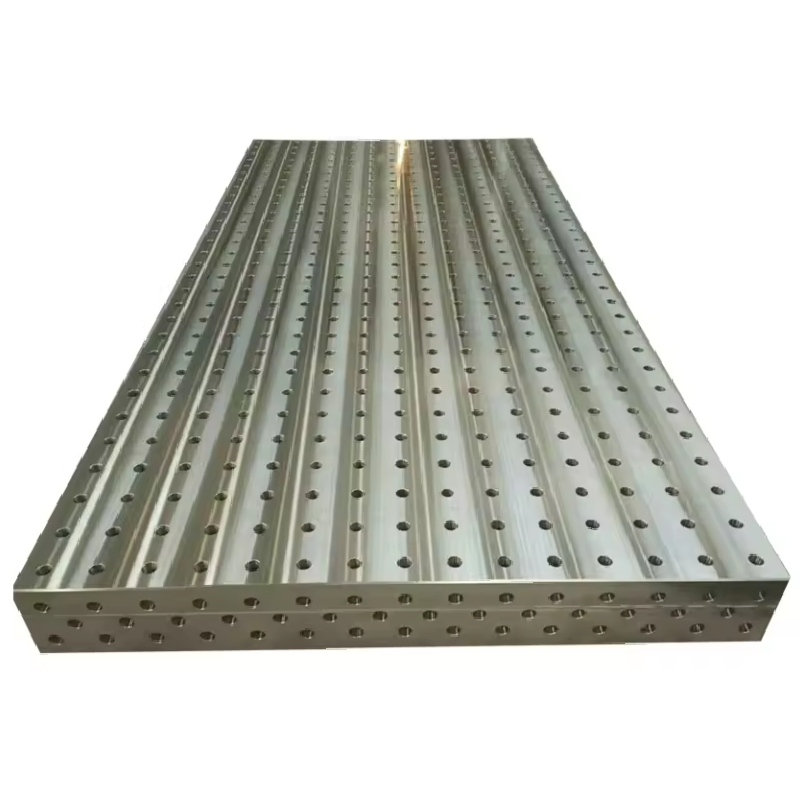
welding table manufacturer
The Importance of Choosing the Right Welding Table Manufacturer Welding is a critical process in var
 English